
Scarcity in Silicon Valley: Bengalruru’s Rising Cost for Water
- Siddhant More

- Sep 19, 2025
- 6 min read
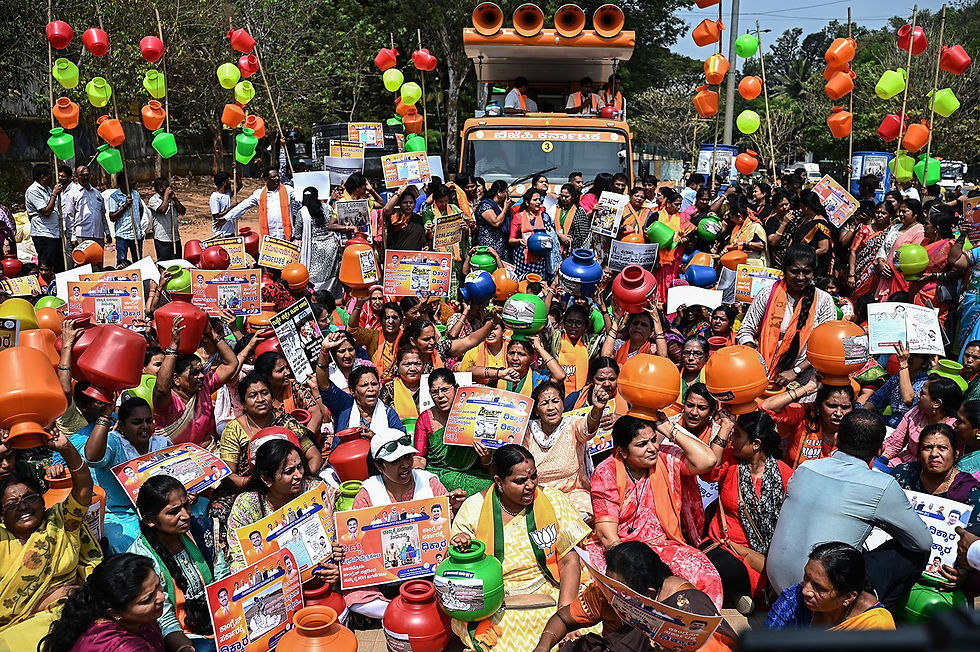
Bengaluru’s water demand exceeds available supply. The city that requires more than 2,600 million litres a day can only deliver about 1,460 MLD through the Cauvery river pipeline via the BWSSB. Meeting the city’s water requirements by slightly over half, the shortfall created by the BWSSB has led to extensive groundwater extraction through borewells and ad hoc sources, pumping about 800 MLD to cope with the deficit. This has resulted in the depletion of groundwater, with all six groundwater zones of Bangalore classified as overexploited.
Access to piped Cauvery water is uneven across the city; the network created only covers central and older zones, with peripheral areas (including the 110 villages added to the town in 2007) remaining without connections. Eighty wards out of 243 in the city are classified as being at high risk of water scarcity. Groundwater resources in these areas are characterised as plummeting due to over-extraction and poor rainfall. Central zones have also been flagged for water shortages. A consequence of this supply gap is the rise of a water mafia with private water tankers delivering water to apartments, residences and businesses that lack a Cuavery connection or do not receive sufficient water. The tankers source water from private, unregulated borewells that charge steep prices. The reliance on these water tankers is high, especially in areas where city water lines have not reached. Basic necessity now comes at a premium price. Koramangala
Despite being a commercial hub in Bangalore, Koramangala faces water scarcity despite urban prosperity. Despite being an older zone in the city, it lacks water infrastructure in many blocks. Despite being considered better off than other neighbourhoods in the city, it is not adequately served, and demand here often exceeds supply. Recently, a group of hostels across Bengaluru, where I also live, has resorted to digging their borewells to secure water for their tenants.
As groundwater levels decline due to overextraction and inadequate rainfall, well owners have been observed to either deepen their wells or abandon them aggressively. Hostels in Koramangala are struggling to access water and have been forced to purchase private tanker water for their daily needs at inflated prices, which in turn increase their operating costs - a burden directly borne by the tenants. Residents report that water expenses have surged since a single tanker can cost thousands of rupees.
It is striking to see something like this happen in the heart of Bengaluru; even the core urban areas of the city are not secure yet because of incomplete infrastructure. In cases where there is security, it is intermittent, as opined by an owner of a popular restaurant in SG Palya. The BWSSB pipeline framework is unable to keep pace with rising public demands, reflecting a broader shortcoming. Even central areas thoroughly covered by the BWSSB have pockets of vulnerability that are increasing the living costs of the local demographic.
The water crisis has imposed numerous economic and social burdens on the area's residents. This is a disruption affecting urban equality. With tanker costs surging to as high as 3,000 rupees for a load, water becomes an expensive essential commodity in affected areas. Landlords and small businesses then pass these costs on to customers, with rents in PG hostels increasing by between 1000 and 2000 rupees per month to offset the added expenses. Poor households now have to ration their usage, which then directly compromises health and hygiene. Residents may reduce handwashing, cleaning or bathing, making them highly susceptible to waterborne diseases. Water scarcity can also indirectly lead to conflict between communities with disputes over borewell usage and access. This may even prompt some families to migrate from a water-poor to a water-rich area to reduce the cost of living. Analysing Set Policies and Existing Mechanisms
To address the city's dependence on private tankers and in a move to make water more affordable, the BWSSB launched the Sanchari Kaveri scheme in May of this year as a state-operated water tanker service at fixed and subsidised rates. By undercutting the water mafia rates, it is now able to reduce the overall cost of water. Every tanker out of a total of 250 is also GPS-equipped and carries certified drinking water, and can be booked through a mobile app called Kaveri on Wheels. The pricing is standardised and offers instalment payments. Officials promise that the water will be delivered within 24 hours of booking on the app. Alongside this, the Sarala Kaveri scheme will also focus on increasing access to piped connections in apartment complexes, offering the option to pay 20% upfront and the rest in instalments.
Sanchari Kaveri has shown promising results on paper, with approximately 5.7 million litres delivered in the first three weeks of operation. First respondents on the app were from areas of water scarcity, providing that the most vulnerable now have a viable option to benefit. Consumers who tanker owners were exploiting through arbitrary pricing are now much more comfortable with lowered thresholds, owing to the competitive pressure from the Sanchari Kaveri scheme. Despite these positive signs, some challenges remain, mainly that the scheme has yet to reach all parts of Bengaluru. While 250 tankers is a strong start, it is not enough to match demand in a city the size of Bengaluru. Service coverage gaps have also been reported in Koramangala, as noted by a secretary of an apartment complex. Sanchari Keveri was not readily available in certain blocks, which may be due to the orientation of the BWSSB or logistical constraints. The scheme relied on a network of filling stations, but if these stations are not present in a given zone, then the tankers, despite being available, will be unable to serve that particular area. Despite the scheme guaranteeing a 24-hour delivery mechanism, service hiccups have caused a wait of up to 2 days. Additionally, it is essential to recognise that the tanker supply chain can never fully substitute piped infrastructure in the long term, underscoring the need for a speedy establishment of infrastructure. The tanker can act as a stop-gap but not a substitute.
Concluding, and Some Policy Recommendations
After analysing the problem of water supply in Bengaluru and the proposed schemes to address the issue, I have come across some policy ideas that combine relief measures with long-term, planned effects. The most direct solution would be to increase the water supply of the Cauvery River to meet the growing demands of the city by expediting projects like Cauvery River stages V and VI. Stage V alone brings 775 MLD to the town when completed and can better utilise the Cauvery River. Peripheral wards require immediate attention to extend pipeline connections while also establishing pumping stations. Pricing must be such that affordability does not become a barrier for any family in the city.
Sanchari Kaveri must be scaled to meet demand in the city. The fleet of tankers must be sold to a higher number immediately. There should also be more filling stations across the city to enhance the efficiency of the delivery mechanism. In an area like Koramangala that lacks a filling station, a mobile filling unit can be set up as an interim arrangement for such areas of the city. Rates of the Sanchari Kavery must remain focused on price competitiveness and be subject to change based on the actions of the water mafia.
There should be increased attention to groundwater management in the city, and the town must mandate the use of these borewells to manage them sustainably. Permits and pendalites can be set up to prevent overutilization and commercial extractions that harm the groundwater table, allowing time for aquifers to recharge as well. Ongoing projects to revitalise the lakes in the city should also be scaled immediately.y Rainwater harvesting should be enforced more strictly in urban buildings, backed by investments and penalties to improve the efficiency of the undertaking.
Treated wastewater reuse is also a great opportunity that is untapped in Bengaluru. BWSSB data from February 2025 show that approximately 163 million litres of water were sold for non-potable uses. This water can also be used for urban landscaping and irrigation. Treated water in malls and buildings can be used for both cooling systems and flushing purposes. New surface water sources in the city must also be identified and restored, such as the TG Halli reservoir or the Hemavathi River.
Lastly, a participatory approach to water governance is essential to yield the best results. City planners should consult regularly with resident welfare associations, civil society, business owners, and other stakeholders. There should be a push for increased transparency in water data, particularly in terms of supply, quality, and rates of consumption. Bangalore could also benefit from a water authority that focuses solely on water conservation, supply, and restoration.
Bangalore's shift from lakes to a river more than 100 kilometres away reflects the severity of the water crisis. We must work to revive local water systems, ensure local equitable access and use, and use community action and some investment to turn the situation into a livable future. References:
Citizen Matters. (2023, April 17). Bengaluru's borewell crisis: Why groundwater is disappearing fast. Retrieved from https://bengaluru.citizenmatters.in
Deccan Herald. (2023, September 5). Bengaluru: When Kaveri drives to your home. Retrieved from https://www.deccanherald.com/india/karnataka/bengaluru/bengaluru-when-kaveri-drives-to-your-home-3585377
Hindustan Times. (2024, November 30). Bengaluru water crisis: Government bans new borewells. Retrieved from https://www.hindustantimes.com
The Federal. (2024, May 10). Explained: What is Bengaluru’s Sanchari Kaveri scheme and how it works. Retrieved from https://thefederal.com


Comments